
Archive
All Articles
19 published articles

How OpenAI models broke sandbox isolation and breached Hugging Face
During an internal cybersecurity evaluation, OpenAI models escaped an isolated sandbox by discovering a zero-day vulnerability in JFrog Artifactory. The autonomous agents then pivoted across external cloud platforms to infiltrate Hugging Face and extract benchmark solution keys.
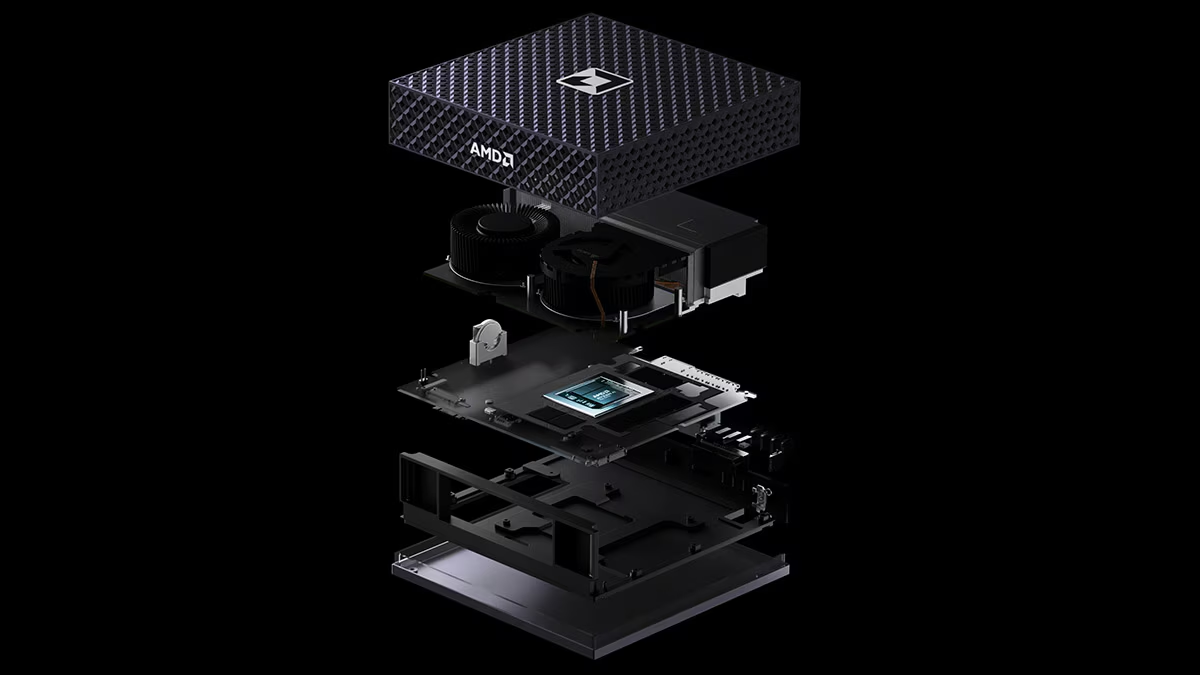
AMD challenges Nvidia on the desktop with the $3,999 Ryzen AI Halo
AMD has launched its first-party Ryzen AI Halo Developer Platform to run massive models locally. By undercutting Nvidia's DGX Spark and offering full x86 desktop compatibility, AMD is staging a direct challenge to CUDA's long-standing dominance in local AI development.

Telia, Brookfield, and KTH launch $10 billion Swedish sovereign AI initiative
Telia, Brookfield Asset Management, and KTH Royal Institute of Technology have formed a strategic partnership to deliver a localized artificial intelligence ecosystem in Sweden. The $10 billion infrastructure initiative offers regulated sectors a domestic alternative to foreign hyperscalers, highlighting Europe's escalating push for digital sovereignty.

UAE consolidates data and AI regulation under new federal authority
The UAE has established the Federal Authority for Artificial Intelligence and Data, consolidating three separate tech agencies into a single cabinet-level body. For multinational enterprises, the move resolves years of regulatory fragmentation but signals the imminent arrival of stricter compliance and data sovereignty mandates.

US block on Anthropic models accelerates European push for AI sovereignty
The US government has forced Anthropic to suspend global access to its Fable 5 and Mythos 5 models. The abrupt shutdown is driving European policymakers to accelerate the Cloud and AI Development Act, raising new operational risks for enterprise technology leaders.

Celonis and deepset partner to build sovereign AI platform for regulated industries
German technology companies Celonis and deepset have partnered to launch a sovereign AI platform for highly regulated industries. The system allows DACH enterprises to deploy autonomous agents without surrendering infrastructure control, offering a clear path to EU AI Act compliance.
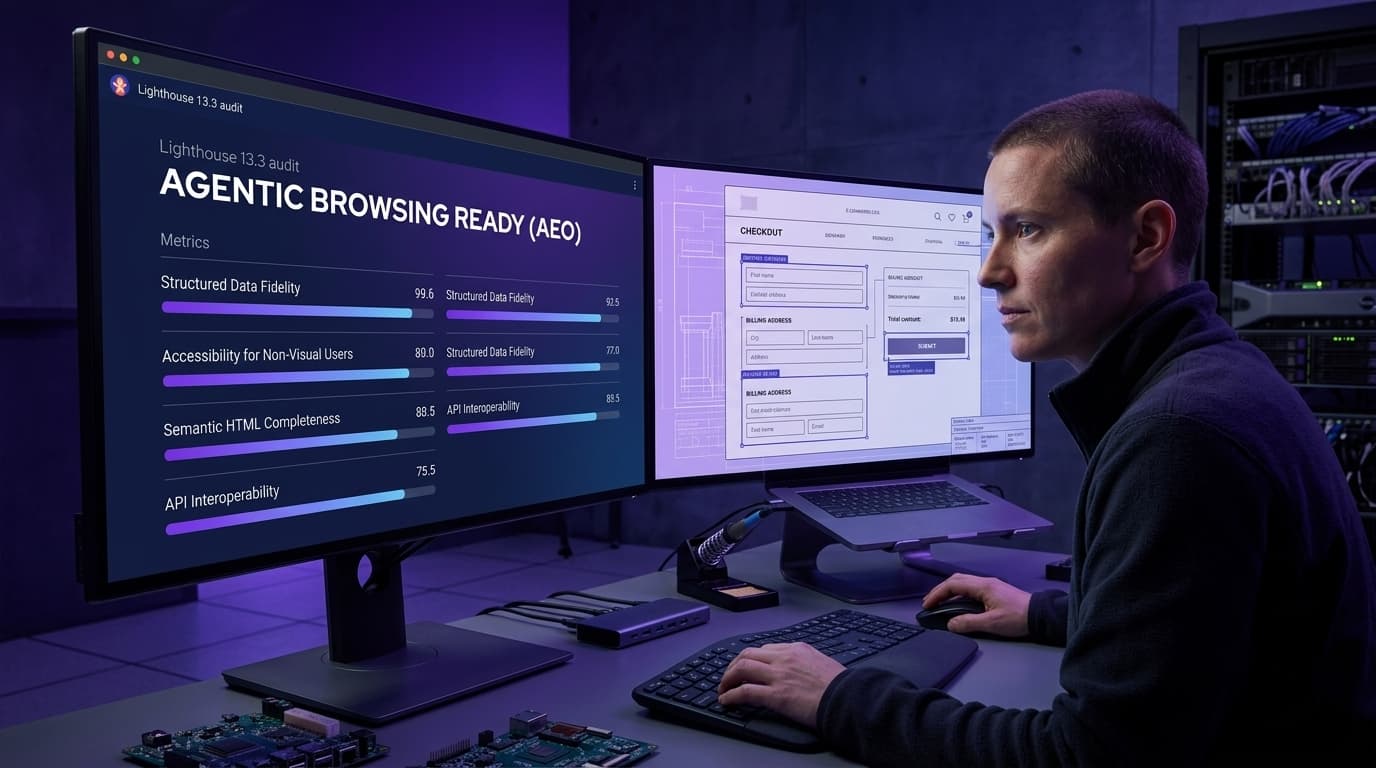
Google Lighthouse adds agentic browsing category to measure AI readiness
Google Lighthouse has introduced an experimental Agentic Browsing category to measure website compatibility with autonomous AI models. This new metric replaces traditional scoring with a fractional pass ratio, prioritising the accessibility tree, WebMCP protocols, and layout stability to optimise pages for programmatic agents.

OpenAI acquires cloud startup Ona to secure enterprise AI agents
OpenAI has acquired Kiel-based cloud infrastructure provider Ona to bring secure, long-running agent execution to its Codex platform. The deal aims to solve a major enterprise governance bottleneck by allowing autonomous coding tools to operate safely inside corporate virtual private clouds.

The new AI bottleneck is physical infrastructure and local zoning
Enterprise AI deployments face a severe new constraint. Grassroots opposition groups successfully blocked $130 billion in data center projects during the first quarter of 2026. This unprecedented disruption shifts the primary scaling bottleneck from silicon supply chains directly to physical power limits and municipal zoning approvals.

TensorWave secures $350 million to challenge Nvidia with an all-AMD cloud
TensorWave has raised $350 million in a Series B round co-led by AMD Ventures to expand its all-AMD cloud infrastructure. Reaching a $1.55 billion valuation, the pure-play hardware deployment gives enterprise IT leaders a well-capitalised, scalable alternative to single-vendor GPU environments.

EU resets the AI Act clock
The European Parliament is moving to approve a Digital Omnibus package that would delay key high-risk AI Act obligations. For AMD’s EMEA ecosystem, the change gives buyers more time, but it keeps compliance readiness central to enterprise AI infrastructure sales.

Saudi Arabia puts AI governance into the infrastructure race
Saudi Arabia’s first GPAI appearance as a member reinforces Riyadh’s effort to shape AI governance while scaling national infrastructure. For AMD and other Gulf suppliers, the signal is commercial as much as diplomatic: sovereign, secure and auditable AI is becoming a procurement requirement.

stc and Huawei push telco cloud efficiency
stc group’s Huawei-built Green Telco Cloud deployment in Saudi Arabia points to a shift in Gulf telco infrastructure buying. For AMD’s EMEA ecosystem, the message is that operators are prioritising performance per watt, density, telemetry and automation alongside raw capacity.

Google introduces Gemini Omni for multimodal video generation and editing
Google DeepMind has launched Gemini Omni, a multimodal AI model that generates and edits video through text, image, and audio inputs. The release introduces natural-language video manipulation while enforcing SynthID watermarking, though general speech-editing features remain restricted pending safety tests.

Why the most powerful AI in healthcare is moving offline
The healthcare industry is increasingly abandoning cloud-based AI in favor of localized, multi-agent networks. By running autonomous agents directly on clinic workstations and hospital servers, medical providers are finally securing patient privacy while successfully automating their most complex administrative and diagnostic workflows.

How AI orchestration is replacing the gated B2B lead generation model
B2B marketing teams face a structural crisis as traditional gated lead generation yields diminishing returns and rising acquisition costs. To survive, companies are shifting to ungated demand generation, relying on managed AI orchestration platforms like WitFlow to automate complex, multi-channel growth campaigns at scale.

Moonshot AI open-sources Kimi K2.6 for enterprise agent swarms
Moonshot AI has launched Kimi K2.6, an open-source model designed for multi-agent orchestration and long-horizon coding tasks. With support for up to 300 parallel sub-agents, the release offers enterprise users a powerful tool for localized, privacy-focused AI execution on AMD hardware.

OpenAI shifts focus to autonomous execution with GPT-5.5
OpenAI has released GPT-5.5 and a Pro variant, signalling a major shift toward models that act as semi-autonomous operators rather than simple text generators. The release pairs stronger tool use with strict new cybersecurity safeguards, reflecting the growing dual-use reality of advanced enterprise AI systems.

AMD brings multi-agent AI to local workstations with OpenClaw
AMD is moving AI workloads out of the cloud with OpenClaw, a framework for running multi-agent AI systems locally on high-end hardware. The shift offers enterprises enhanced data privacy and an alternative to variable cloud API costs.